AI-Assisted Radiology: How AI Is Making Medical Imaging Faster, Smarter, and More Efficient
 By Rashmi Kanti
Content Strategist, QSS Technosoft
August 7, 2026
8 min read
Last Update on 7 August 2026
By Rashmi Kanti
Content Strategist, QSS Technosoft
August 7, 2026
8 min read
Last Update on 7 August 2026
Quick Answer
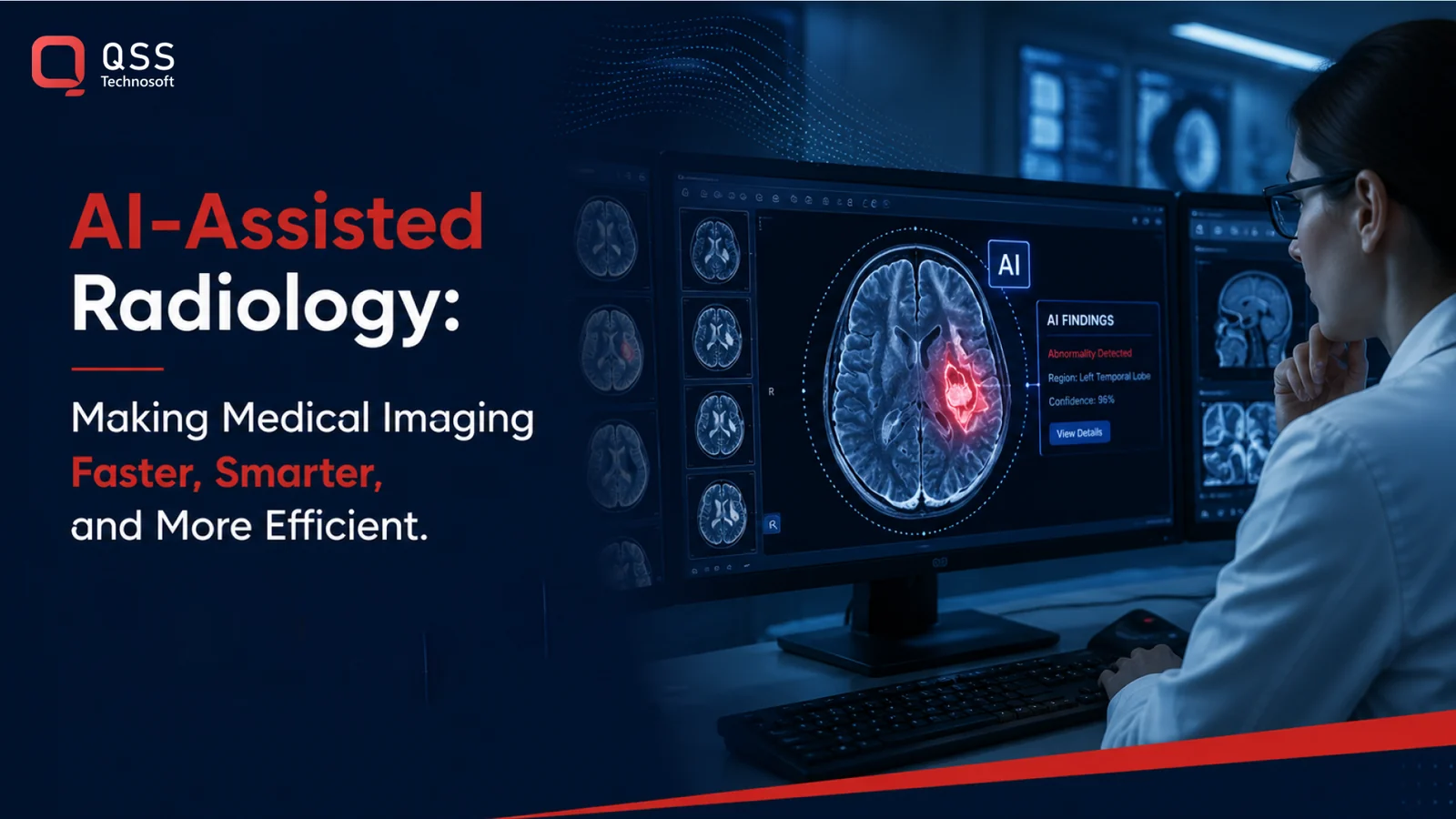
AI-assisted radiology uses machine learning to support — not replace — the radiologist: flagging suspected findings, prioritizing urgent cases, automating measurements, and drafting reports. The result is faster, more consistent reads and less administrative load. The catch: AI only delivers when it's built directly into the imaging workflow and PACS, not bolted on as a separate tool.
The best AI in radiology isn't the most accurate model — it's the one clinicians actually use because it lives inside their existing workflow.
Why Radiology Needs AI More Than Ever
Every day, radiologists review hundreds of imaging studies while balancing growing workloads, increasing case complexity, and mounting administrative tasks. CT scans, MRIs, X-rays, ultrasounds, mammography, and PET imaging continue to grow across hospitals and diagnostic centers, while the number of radiologists has struggled to keep pace.
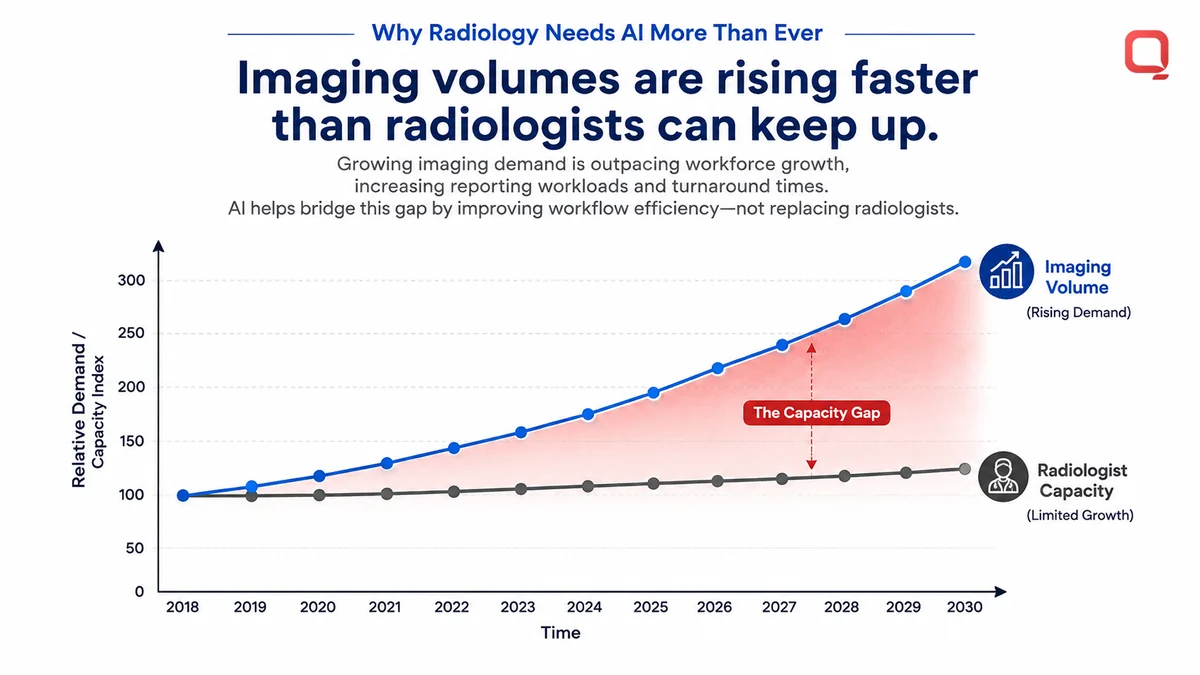
AI-assisted radiology is helping solve this challenge — not by replacing radiologists, but by helping them work faster, prioritize urgent cases, automate repetitive tasks, and produce more consistent reports. In this article, we'll explore how AI is changing modern healthcare software and radiology workflows, where it's delivering real value today, and what healthcare organizations should look for before investing.
What "AI-Assisted Radiology" Actually Means
Artificial intelligence has become one of the most discussed technologies in healthcare, but it's also one of the most misunderstood. Many people still imagine AI independently reading medical images and replacing radiologists altogether. That isn't how modern AI-assisted radiology works.
Instead, AI acts as an intelligent assistant that works alongside the radiologist throughout the diagnostic process. As soon as an imaging study enters the system, AI algorithms can analyze the images, identify potential abnormalities, highlight suspicious regions, calculate measurements, prioritize urgent cases, and even generate structured report suggestions.
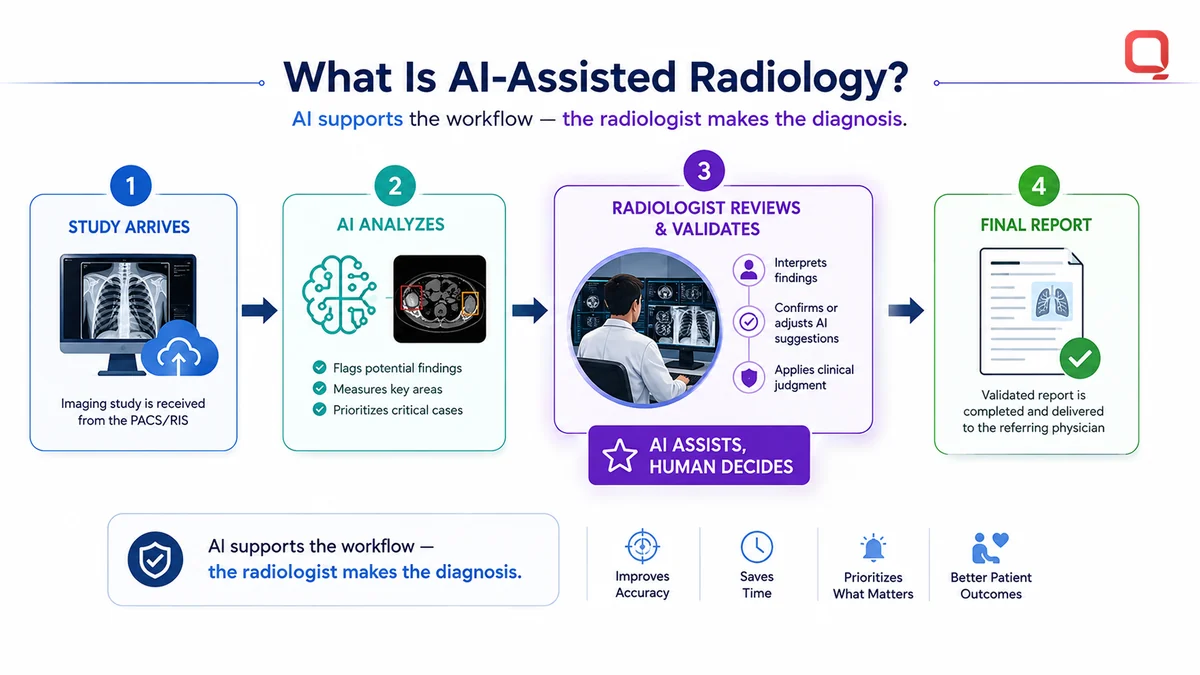
The radiologist reviews every recommendation, validates the findings, adds clinical context, and makes the final diagnosis. In other words, AI supports the workflow — it doesn't replace clinical judgment. Think of AI as an experienced second reader that's available 24/7: it never gets tired, never skips measurements, and can instantly analyze thousands of images while the radiologist retains complete control over every clinical decision.
Where AI Is Delivering Real Value Today
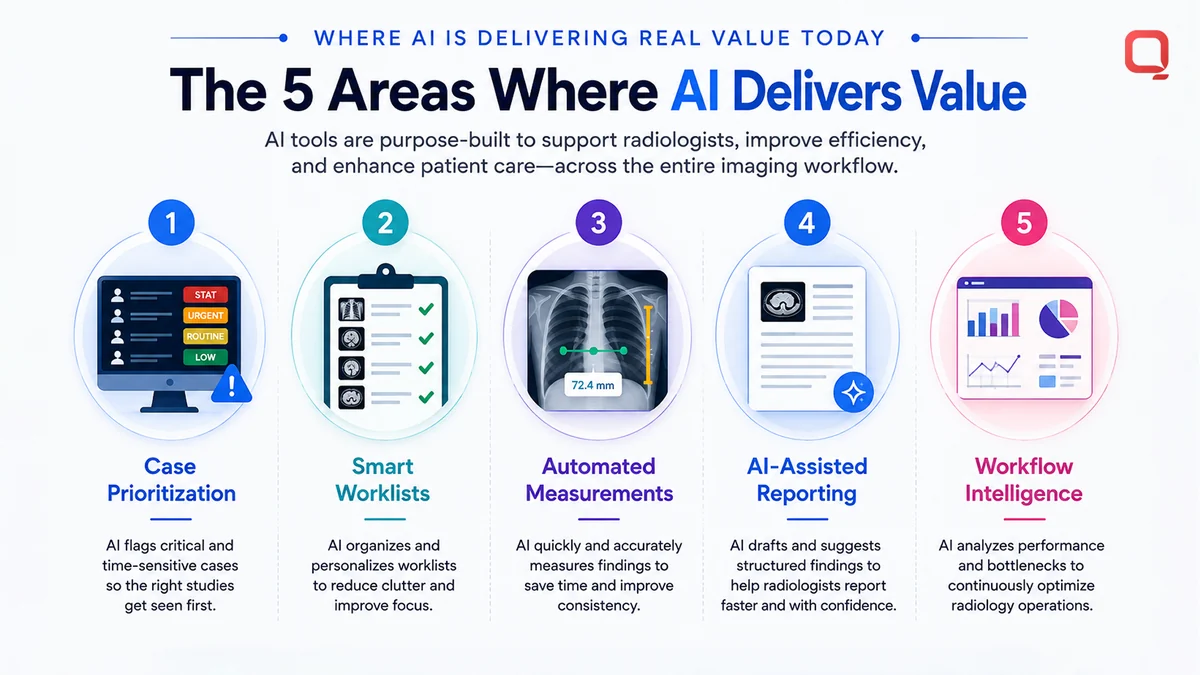
Healthcare AI receives enormous attention, but not every use case has reached clinical maturity. The most successful AI applications in radiology aren't the flashiest — they're the ones solving everyday workflow challenges. Here are the areas where AI is making the biggest impact.
1. Intelligent Case Prioritization
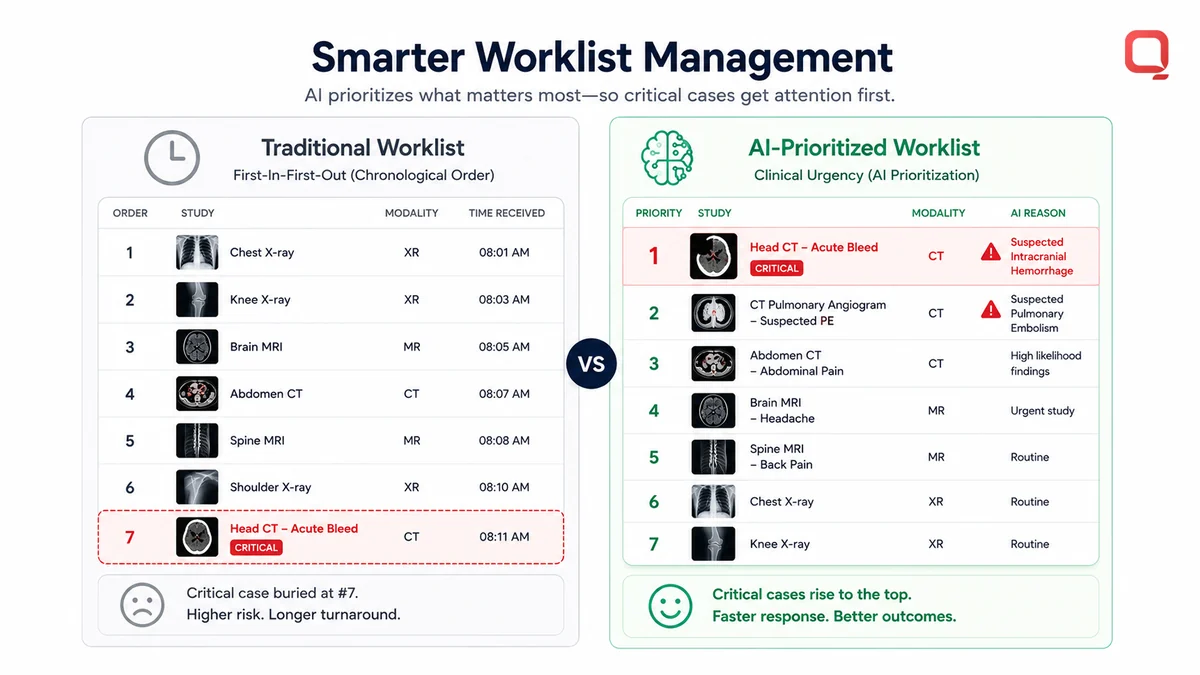
Every imaging study doesn't require the same level of urgency. AI can analyze incoming studies in real time and identify findings that may indicate conditions such as intracranial hemorrhage, pulmonary embolism, pneumothorax, large vessel occlusion, lung nodules, and bone fractures. When a potential critical finding is detected, the system automatically moves the study higher in the radiologist's worklist — faster clinical response without changing existing workflows.
2. Smarter Worklist Management
Traditional worklists display examinations based on arrival time, which isn't always the most efficient approach. AI organizes imaging queues by clinical urgency, suspected pathology, patient history, examination type, and previous imaging comparisons — so radiologists focus on the highest-priority cases first while routine studies keep moving. For busy hospitals, even small improvements in prioritization can significantly reduce reporting delays.
3. Automated Measurements and Quantification
Manual measurements are essential but time-consuming. AI can automatically measure lesions, calculate organ volumes, track changes across previous studies, compare follow-up scans, and generate quantitative imaging data. Radiologists still verify every result, but they no longer need to perform every calculation from scratch — reducing repetitive work while improving consistency between readers.
4. AI-Assisted Reporting
Documentation remains one of the most time-consuming parts of radiology. AI can generate report drafts, suggest structured templates, auto-populate measurements, highlight key findings, and standardize terminology. Instead of replacing the radiologist's report, AI provides a strong starting point clinicians review, edit, and finalize — reducing documentation time while improving consistency.
5. Workflow Intelligence Beyond Image Analysis
AI isn't limited to image interpretation. Modern imaging platforms increasingly use AI to identify reporting bottlenecks, predict examination volumes, recommend follow-up imaging, monitor turnaround times, and optimize departmental resource allocation — operational insights that improve efficiency well beyond the individual workstation.
The biggest benefit isn't better AI — it's better workflow.
Prioritized worklists, automated measurements, structured reporting, and fewer clicks give radiologists more time for the work only they can do.
See the AI-enabled PACS viewer →Does AI Replace Radiologists? No — and That's the Point
While AI has become remarkably good at identifying patterns and automating repetitive tasks, radiology is far more than image recognition. Every diagnosis requires clinical context, patient history, comparison with prior studies, collaboration with referring physicians, and careful medical judgment.
An AI model might flag a suspicious lung nodule or identify a possible brain hemorrhage, but it cannot independently understand the complete clinical picture. The same imaging finding may require different interpretations depending on the patient's age, medical history, previous imaging, current symptoms, laboratory results, and ongoing treatment plan. This is where radiologists remain irreplaceable. The future of radiology isn't AI versus radiologists — it's AI working alongside radiologists.
The Benefits of AI-Assisted Radiology
When implemented effectively, AI can improve nearly every stage of the imaging workflow.
Faster Turnaround Times
AI helps prioritize urgent studies, automate repetitive tasks, and reduce reporting delays. For emergency departments and critical care teams, even a few minutes saved on urgent cases can make a meaningful clinical difference.
Greater Reporting Consistency
AI-assisted measurements and structured reporting help standardize documentation, improving consistency across departments while reducing reader-to-reader variability — particularly valuable for long-term disease monitoring.
Reduced Administrative Burden
AI automates many repetitive processes — manual measurements, report formatting, comparing previous studies, navigating worklists, and entering structured data — letting radiologists spend more time on patient care than documentation.
Improved Department Efficiency
As imaging volumes rise, hiring more radiologists isn't always feasible. AI enables existing teams to handle increasing workloads more efficiently without compromising quality.
Better Patient Experience
Every workflow improvement benefits patients: when radiologists identify critical findings sooner and complete reports faster, patients receive quicker diagnoses and clinicians can begin treatment earlier.
Why Many AI Imaging Projects Fail
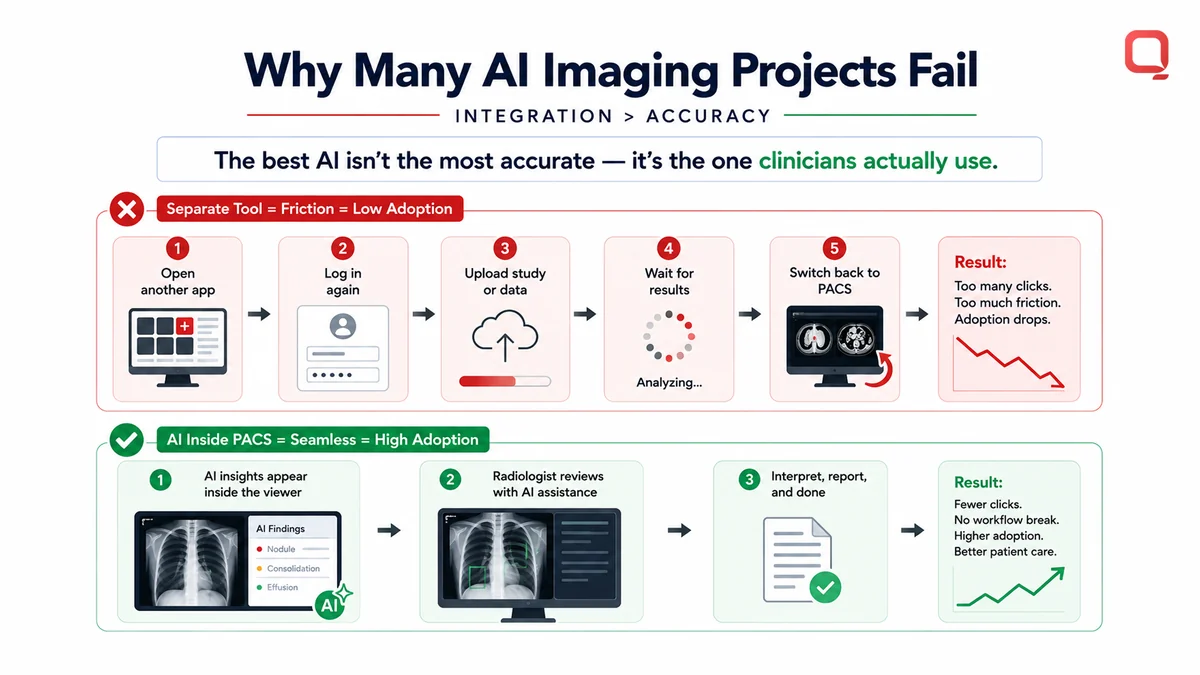
Despite the excitement around healthcare AI, many projects never move beyond pilot programs. The problem usually isn't the AI model itself — it's the workflow. A model may achieve impressive accuracy during demonstrations, but if using it requires radiologists to leave their normal reading environment, adoption quickly drops.
Imagine asking a radiologist to open another application, log into a separate platform, upload images manually, wait for AI analysis, switch back to PACS, and continue reporting. Even if the AI performs exceptionally well, those extra steps create friction that slows down already busy workflows — and eventually clinicians stop using it. Technology should simplify work, not add more clicks.
Integration Is More Important Than Accuracy Alone
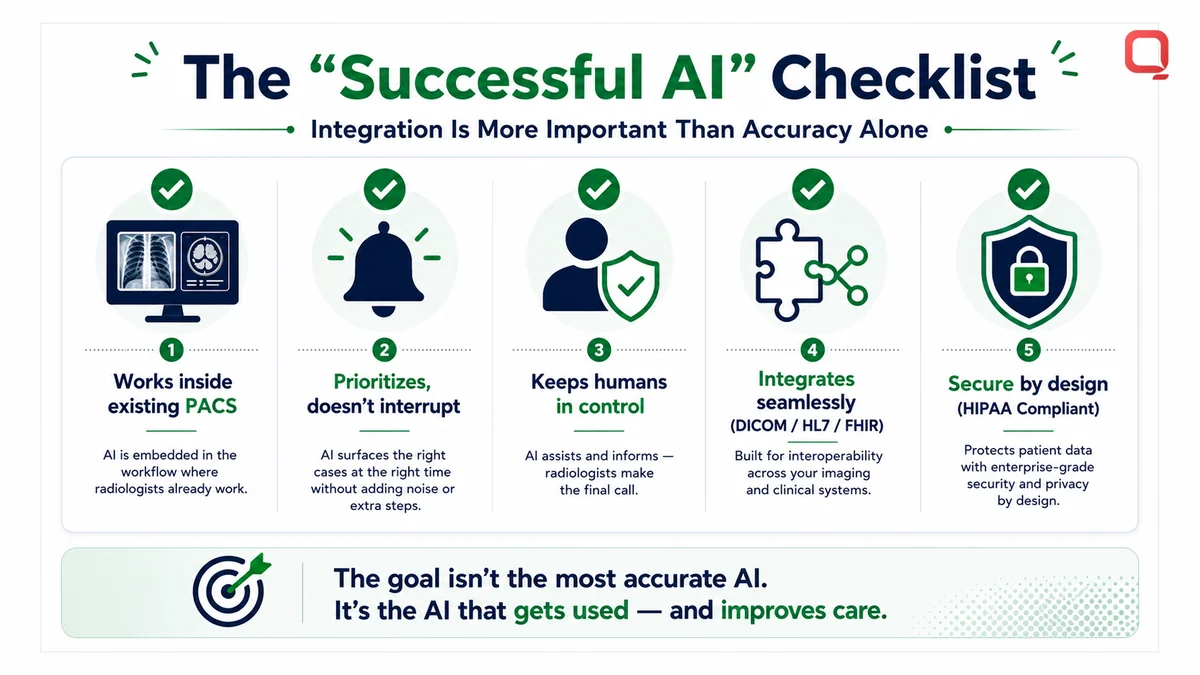
The best AI isn't necessarily the most accurate AI — it's the one clinicians actually use every day. That only happens when AI becomes part of the existing workflow rather than an additional one. Successful AI solutions typically share several characteristics:
They Work Inside Existing PACS
Radiologists shouldn't have to switch between multiple systems. AI findings should appear directly within the diagnostic viewer they already use.
They Prioritize Rather Than Interrupt
Good AI quietly helps — surfacing urgent findings and assisting reporting without overwhelming clinicians with unnecessary alerts. Too many notifications create alert fatigue; the best systems know when to stay out of the way.
They Keep Humans in Control
AI recommendations should always remain suggestions. Radiologists review every finding, validate every measurement, and approve every report. Human oversight remains essential for clinical quality and regulatory compliance.
They Integrate Across Healthcare Systems
An effective AI platform should integrate seamlessly with PACS, RIS, EHR, DICOM imaging workflows, HL7 messaging, and FHIR interoperability standards. The easier information flows across systems, the more valuable AI becomes.
They Are Built with Security in Mind
Medical imaging contains highly sensitive patient information. Organizations should ensure AI platforms include HIPAA-compliant architecture, role-based access control, encryption during storage and transmission, comprehensive audit trails, and secure cloud or on-premises deployment options.
Questions Every Healthcare Organization Should Ask Before Investing in AI
Choosing an AI imaging platform involves much more than evaluating algorithms. Decision-makers should ask practical questions such as:
- Does the AI integrate with our existing PACS?
- Will radiologists use it without changing their workflow?
- Does it support our imaging modalities?
- How accurate is it across different patient populations?
- Can clinicians easily review and override AI suggestions?
- Does it integrate with our RIS and EHR?
- Is it compliant with HIPAA and other regulatory requirements?
- Can it scale as imaging volumes grow?
Organizations that focus on workflow, interoperability, and usability often see far greater long-term success than those selecting platforms based solely on AI performance benchmarks.
How QSS Helps Healthcare Organizations Adopt AI-Assisted Radiology
Implementing AI in radiology isn't simply about purchasing an algorithm. The real challenge is making AI part of the everyday reading workflow without disrupting how radiologists already work. At QSS Technosoft, our zero-footprint DICOM/PACS Viewer brings AI directly into the radiologist's existing workflow rather than forcing clinicians to adapt to a new one.
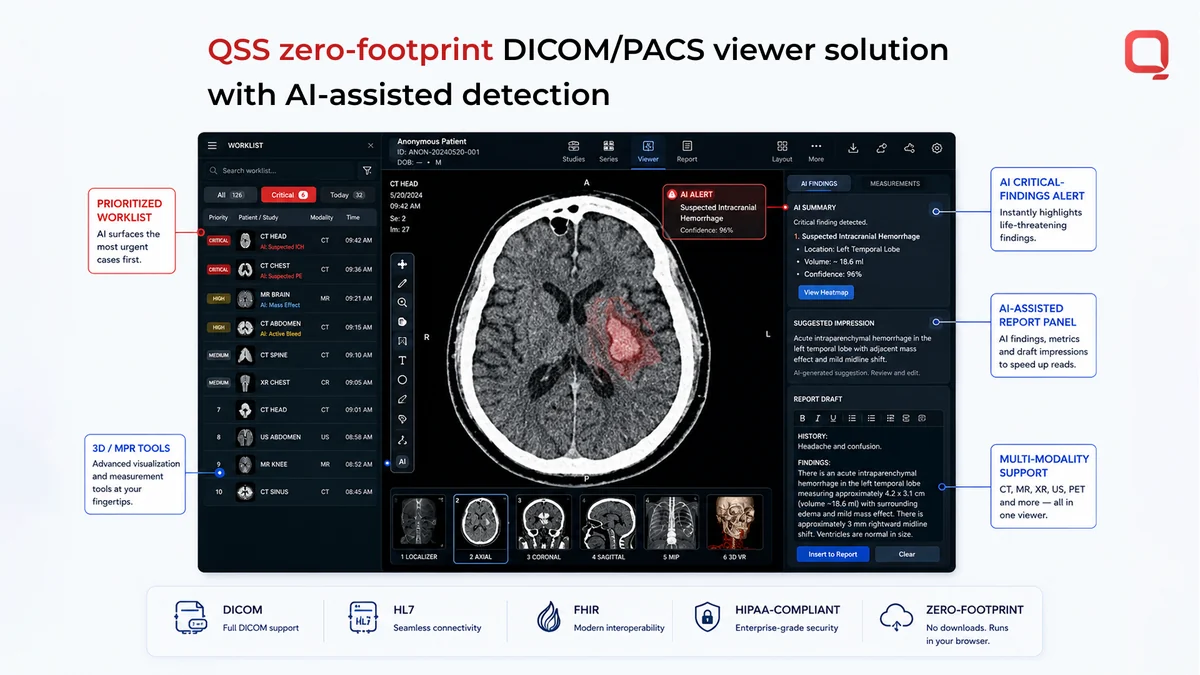
Key capabilities include:
- AI-assisted detection to help identify potential abnormalities earlier.
- Critical-findings prioritization that automatically moves urgent studies to the top of the worklist.
- AI-supported structured reporting to reduce documentation time.
- Automated measurements and annotations for greater consistency.
- Multi-modality support — CT, MRI, PET, Ultrasound, Mammography, X-ray, and more.
- Advanced visualization including MPR, 3D reconstruction, and volume rendering.
- Real-time collaboration between radiologists and clinical teams.
- Cloud-enabled, zero-footprint deployment — secure access without software installation.
The platform integrates seamlessly with existing healthcare ecosystems through DICOM, HL7, and FHIR, and is built with HIPAA-compliant architecture, encrypted data transmission, comprehensive audit trails, and role-based access controls — so AI becomes a natural extension of the reading workflow rather than another standalone application.
What the Future of AI in Radiology Looks Like
The future isn't about replacing radiologists with machines — it's about giving radiologists better tools. Over the next few years, AI will continue expanding beyond image analysis into predictive worklist management, automated quality assurance, clinical decision support, personalized follow-up recommendations, workflow analytics, population health insights, and intelligent scheduling. Instead of performing isolated tasks, AI will become deeply embedded throughout the imaging lifecycle — from acquisition to reporting and long-term patient follow-up.
The Bottom Line
AI-assisted radiology is no longer a futuristic concept — it's already helping healthcare organizations improve efficiency, reduce administrative burden, and accelerate diagnostic workflows. But success isn't determined by the sophistication of an AI model alone. The organizations seeing the greatest value are the ones that prioritize workflow integration, interoperability, usability, and clinician adoption. Radiologists remain at the center of every clinical decision; AI simply helps them get there faster.
Ready to modernize your radiology workflow?
QSS Technosoft's AI-enabled, zero-footprint DICOM/PACS Viewer streamlines imaging with intelligent prioritization, AI-assisted reporting, advanced visualization, and seamless PACS/RIS/EHR integration.
Schedule a personalized demo →